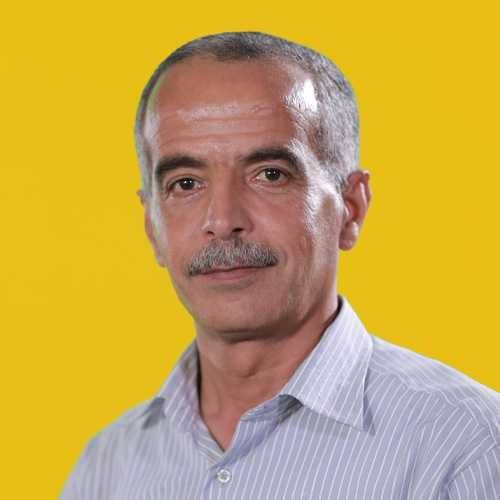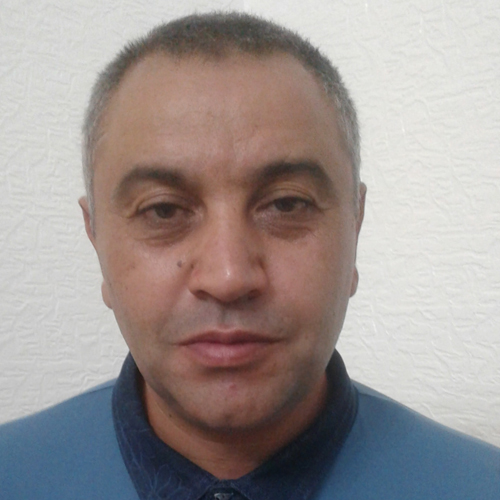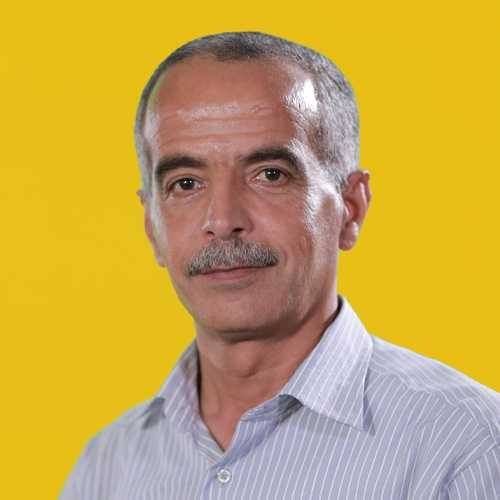
Position: Professor
Position: Assistant Professor
This research focuses on the integration of generative artificial intelligence, particularly Generative Adversarial Networks (GANs), into the field of cybersecurity. The project focuses specifically on improving intrusion detection systems (IDS) in wireless sensor networks (WSNs) and connected environments of Industry 4.0. Generative AI is seen both as a defense lever and as a potential source of threat through its malicious exploitation.
How does generative AI contribute to improving cybersecurity strategies, particularly in the areas of intrusion detection and protection of wireless sensor networks (WSN)?
What are the main methods and techniques used by attackers exploiting generative AI to develop sophisticated cyber-attacks and evade traditional defense mechanisms through machine learning and especially deep learning (DL)?
What possible and unexplored use of generative AI could be a concern when developing intrusion detection strategies robust to attacks generated by generative AI?
Artificial intelligence (AI) technologies, and particularly Generative Adversarial Networks (GANs), are transforming cybersecurity through their applications in defensive and offensive strategies.
The scientific community has explored multiple defensive applications of generative AI in security systems. Within intrusion detection systems (IDS), GANs facilitate the generation of representative traffic patterns that improve learning efficiency and anomaly detection capabilities. Through the generation of adversarial examples, generative AI makes it possible to simulate sophisticated attack vectors, thereby strengthening the resilience of intrusion detection systems (IDS).
In malicious cyber-attack analysis applications, the generation of synthetic samples provides deeper insights into malicious behavior patterns, thus contributing to the development of effective countermeasures to increase the robustness of AI dedicated to IDS systems. This technology is particularly useful in detecting unknown intrusions by generating training datasets including suspected attacks, thereby improving classification accuracy through deep learning (DL) machines.
Furthermore, it can enable the automation of threat response mechanisms and the optimization of security policies through systematic network traffic analysis. However, significant challenges remain, particularly regarding the potential for exploitation of generative AI. An essential element to consider is the dual applicability of these capabilities. While security researchers use generative AI for defensive purposes, malicious actors can exploit similar techniques to develop sophisticated evasion methodologies that circumvent current protection mechanisms.
The research questions (RQ) of the research project are based on several key considerations.
First, it is imperative to examine the existing literature to identify state-of-the-art approaches that leverage generative artificial intelligence, especially GANs, for defensive purposes, such as improving intrusion and anomaly detection systems through machine learning tools and especially DL. Understanding the strengths and limitations of these approaches is essential to develop more robust and effective defense mechanisms (RQ1).
Second, faced with the constant adaptation of attack tactics through adversarial examples, it is essential to anticipate and correct potential vulnerabilities related to the integration of generative AI in cybersecurity. This requires a proactive exploration of potential offensive strategies of adversarial samples, such as the generation of samples designed to bypass AI-based intrusion detection systems (RQ2).
The application areas targeted in our project concern the improvement of security technologies for WSNs and Industry 4.0, through the integration of generative artificial intelligence tools aimed at exploiting machine learning and deep learning to improve the robustness and availability of the secure information system as well as the intelligent identification system and secure location of production resources.
The boundaries of intelligent security systems and connected objects converge daily to create a common platform for hybrid secure systems. Moreover, the combination of generative artificial intelligence and connected objects via radio frequency opens a new dimension to secure technological progress. This connectivity and reliability offer attackers considerable space to launch cyberattacks. To defend against these attacks, intrusion detection systems (IDS) are widely used.
However, new areas of connected objects suffer from unbalanced and missing sampling data, which complicates the learning of intrusion detection and security systems against little-known attacks. Our research work aims to propose robust intrusion detection systems based on generative adversarial networks (GANs), where GANs generate synthetic samples on which IDSs are trained simultaneously with the original samples. The targeted model can also solve the problems of unbalanced or missing data.
Indeed, this research project aims at a new approach to intrusion detection and increasing the reliability and robustness of IDSs through the integration of generative adversarial networks (GANs). By harnessing the power of GANs to generate synthetic network traffic data that faithfully reproduces the real behavior of networks, we address a major challenge associated with IDS training datasets: the scarcity of unknown intrusion data.
All actions that will lead to designing and testing the different components of a robust and reliable intrusion detection system via generative artificial intelligence tools for connected objects take place in parallel in order to facilitate monitoring. Monthly presentations allow monitoring of progress, scientific production and difficulties encountered.
Potential and opportunity for the development of Industry 4.0 in Tunisia thanks to secure WSN technologies and their applications.
Skills development in intelligent cybersecurity and research and development to meet the security challenges of connected environments.
Development of secure WSN technologies and applications for various industrial and economic sectors.
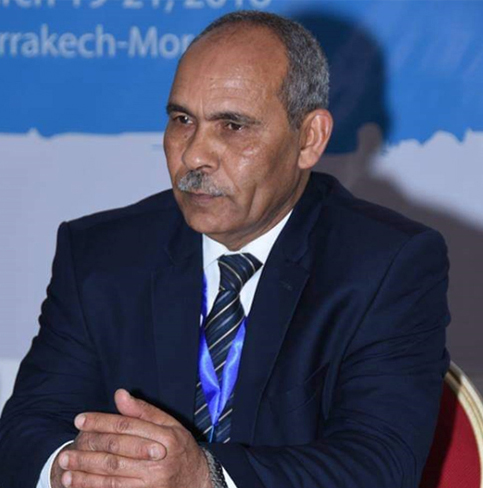
Position: Professor
Position: Professor
Position: Professor
Position: Professor
Position: Professor
Position: Associate Professor
Position: Associate Professor
Position: Associate Professor
Position: Assistant Professor
Position: Assistant Professor
The rapid development of technologies and the intense competition among industrialists to gain the maximum share of national and international markets opens the way for researchers to develop new approaches and/or techniques to better control industrial processes in order to satisfy the performance suggested by the customer. These objectives require a perfect knowledge of these processes as well as the adaptation of existing approaches and the synthesis of new ones for the control of such processes, which can be of different natures, including continuous processes that can be linear, non-linear, singular, delayed, etc., and discrete processes or more precisely discrete event processes.
The proposed approaches concern the identification, diagnosis and control of these systems, emphasizing the insertion of artificial intelligence in the design operation. The real processes addressed in this project are robots and autonomous vehicles, electric vehicles, thermal engines, mechatronic systems, railway systems, electrical networks and transport systems.
For identification we are led to design techniques that make it possible to estimate the model that best reproduces the behavior of the system for any set of measurements taken from the latter. In this theme, we opt for methods using statistical learning and we deal with all forms of the considered processes (linear, non-linear, stationary or not, with or without delay, etc.
For control we are interested in two types of systems, continuous systems and discrete event systems. Given the multitude of results proposed in the literature in terms of control algorithms, we will focus essentially on the design of new approaches for systems with particular specifications and we will place more emphasis on applications. In this context, we are interested in approaches using concepts from artificial intelligence such as meta-heuristics, artificial neural networks and more precisely those using deep learning for neural control of systems with variable delay and especially singular systems.
As applications we are interested in the rate of pollutant gases from a thermal engine, electric vehicles, robots and autonomous vehicles, electrical energy networks,
For observers where we are interested in particular cases concerning the synthesis of observers for singular delayed systems with unknown inputs and especially in the presence of uncertainties on the system parameters. We also propose the synthesis of filters for these systems with delay on the state and on the input and excited by finite energy disturbances.
When the singular system is non-linear and is affected by unknown inputs, we propose a state and unknown input estimation method using a multi-model approach. We also propose the synthesis of a filter in the frequency domain and thus apply control approaches.
Similarly when the singular system is bilinear we propose to synthesize correctors and observers for this type of system when they have delays and are subject to unknown inputs present at the state equation and the output equation.
Finally the case of uncertain linear systems will be the subject of the same studies.
There are four teams contributing to the project, which interfere and deal with several themes at the same time. It should be noted that all contributions will be validated either on the laboratories' own processes or on processes within other laboratories abroad with which our laboratory maintains collaborative links.
Expected results include:

Position: Professor
Position: Associate Professor
Position: Associate Professor
Position: Assistant Professor
Position: Assistant Professor
Position: Assistant Professor
The studied theme mainly concerns the use of artificial intelligence methods for two main research axes:
Artificial intelligence (AI) has become an essential field in the development of innovative solutions for various scientific and technical disciplines. In the context of automatic control and systems control, modeling and diagnosis of dynamic systems are crucial steps to understand and control complex processes. Traditionally, these processes have been approached using classical mathematical models such as linear and non-linear models, which have shown their limitations when they must describe increasingly complex and unpredictable systems.
Regarding the modeling of complex systems, the use of artificial intelligence algorithms opens new perspectives by combining the expressiveness of NARX-Laguerre type models or, more generally, models exploiting orthogonal bases, with the learning capacity of AI algorithms (such as neural networks, optimization by evolutionary algorithms, or reinforcement learning). Such algorithms could allow a better understanding and modeling of complex systems, where classical approaches often fail. It should be noted that models based on orthogonal bases present interesting potential to represent a wide class of dynamic systems, whether linear or non-linear. These orthogonal bases allow describing complex behaviors, while retaining interesting algebraic properties for system parameter identification.
Fault detection and diagnosis play an essential role in maintaining product quality and safety, as well as improving the overall efficiency of industrial processes. These techniques allow quickly identifying anomalies or deviations from normal operating conditions, thus enabling rapid corrective actions to prevent or mitigate potential faults. A fault is any unauthorized deviation of at least one parameter or process variable in the facility. Thus, it is necessary to use process monitoring methods to detect faults and maintain processes in a safe and reliable state. Fault detection, diagnosis, and prognosis are the main phases of process monitoring. The detection step aims to determine the existence of a fault in the system, the diagnosis step aims to determine which fault occurred, and fault prognosis aims to predict the future behavior of the process anomaly. Fault detection and diagnosis are two important research areas that have attracted great attention in academic and industrial fields. By proactively planning maintenance activities based on fault detection, costly downtime and unplanned stoppages can be minimized. Fault detection and diagnosis can be classified into model-based, knowledge-based, and data-based approaches. Model-based approaches rely on comparing the observed process behavior, as detected by sensors, with the expected behavior predicted by a mathematical process model. This model generally stems from a comprehensive understanding of the process under normal and fault-free conditions, often based on physical and chemical principles. The comparison between actual process measurements and model predictions produces a residual that indicates whether the process is operating normally or encountering faults. However, the effectiveness of model-based methods depends on the accuracy of the mathematical model, which can be difficult to develop due to the complexity of industrial processes and the many parameters involved. Knowledge-based approaches refer to systems or methods that rely on human expertise, domain knowledge, or established principles to make decisions or solve problems. Knowledge-based systems often use rules, heuristics, or knowledge bases to guide their reasoning and decision-making processes. On the other hand, data-based techniques use historical data collected during fault-free processing operations. These methods exploit training data to build an empirical model, which is then used to detect faults by analyzing future measurement data.
Among the applications studied in this project, it is important to mention photovoltaic systems, wind systems, and electrical networks. The latter were built to supply electricity from centralized production to fixed customers and expected loads. With the integration of distributed generation sources from microgrid and energy storage technologies, distribution systems become more decentralized and bilateral in nature to achieve system reconfiguration and self-healing capability of the smart grid. Many disputes accompany this new structure and involve regulating bidirectional energy flow, voltage, and oscillation damping in a balanced manner within the network. In these situations, many types of faults can occur in the network, such as source and load side faults, converter faults (inverter and converter), cable faults, data communication faults, cybersecurity, failure of the Internet of Things (IoT) protocol, data leakage, insufficient data, smart meter failures, etc., which are difficult to manage, detect, and control. The increase in faults in various elements of smart grids is a major problem that includes elements of the power production and distribution framework. Moreover, faults can manifest through different failure modes in the same element.
The objectives of this project are multiple:
Develop artificial intelligence algorithms for modeling and identification of linear and non-linear systems, using orthogonal bases, while ensuring accuracy, robustness, and generalization of the identified models.
Develop advanced data-based fault detection and diagnosis (FDD) methodologies in industrial systems to improve their operational performance. To do this, different solutions can be studied:
Apply the developed techniques for modeling and diagnosis on recognized complex systems such as:
The team working on this theme of modeling and diagnosis of complex systems using intelligence algorithms first develops optimization and regression algorithms to model complex systems. In a second step, these algorithms will be used for fault detection. The last step is dedicated to developing classification algorithms to identify the type of fault.
Develop algorithms for optimizing the parameters of orthogonal bases using artificial intelligence tools. The optimization of these parameters plays a key role in reducing model complexity.
Application of artificial intelligence algorithms, particularly machine learning and deep learning, for regression of load flow results on the IEEE 9-bus network. Among these methods, we mention MLP, RBFN, SVM, and CNN.
For the fault detection and diagnosis (FDD) phase, enhanced data-driven machine learning techniques are developed. These FDD techniques consist of two main steps: feature extraction and selection (FES) and fault classification (FC). In the FES step, the goal is to extract the most relevant and effective features from the data. Different strategies based on feature extraction using RKPCA methods are developed. Once the features are extracted, only the most relevant features must be selected. In this regard, multivariate statistical methods and statistical measures are used. During the FC phase, the selected features are passed to a Random Forest (RF) classifier.
FDD approaches using artificial intelligence methods, including machine learning and deep learning, are developed to manage electrical quantities in power systems. These techniques rely on the analysis of load flow data, enabling more robust anomaly detection and more accurate fault diagnosis. The feasibility and effectiveness of the proposed AI models are evaluated under both normal conditions and in the presence of failures. Through simulations and experimental validations, AI-based approaches demonstrate optimized performance, both in terms of computational speed and accuracy of diagnostic metrics, thus offering adaptive solutions for power grid supervision.
Literature review on:
Expected results include:
The socio-economic benefits of the project include:

Gouvernance: Constitution du comité de direction
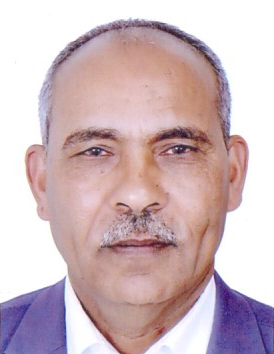
Chef du Laboratoire Hassani Messaoud
| 5 Corps A | 2 Corps B | Doctorant | |||||||||
|

M. Khadhraoui

I.Jaffel
|

S. Mellouli
|
Dans l’onglet "Stage Obligatoire" de l’espace extranet, vous trouvez la liste de toutes les entreprises qui ont accueilli des étudiants de l'ENISo. Vous pouvez dans cette page réaliser des recherches selon un thème choisi.
Depuis la sous-rubrique "Formulaire demande de stage", télécharger la demande de stage personnalisée et déposer la chez les entreprises et sociétés susceptibles de vous accepter en stage. Noter qu’il est possible de déposer plusieurs demandes de stage chez différentes entreprises. Un seul stage obligatoire sera accordé à la fin.
Étape 2 : Affectation et départ en stage
Étape 3 : Dépôt du rapport et soutenance de stage
- Un CD qui contient la version numérique du rapport ainsi que d'autres éléments illustrant le projet (codes, images, annexes, etc.),
- Trois exemplaires du rapport de stage (qui seront fourni aux membres de jury),
- Le journal de stage soigneusement rempli par l'étudiant et visé par l'encadrant professionnel,
- La Fiche d'évaluation remplie et signée par l'encadrant professionnel.
Étape 4 : Ce qu'il faut faire après la soutenance
Tenir compte des remarques du jury lors de la soutenance et corriger, selon leurs instructions, le rapport de stage.
Remettre à la bibliothèque centrale deux copies corrigées du rapport de stage. Aucun rapport ne sera accepté à la bibliothèque centrale s'il n'est pas signé par l'encadrant universitaire et portant la mention "Vu".
Remettre un CD à la bibliothèque centrale contenant une version pdf de la totalité de votre rapport de stage (version corrigée). Le CD doit porter le N° d'ordre de votre rapport version papier.
Page 3 of 7

 FR
FR  EN
EN