

 FR
FR  EN
EN Research Team
Project Leader
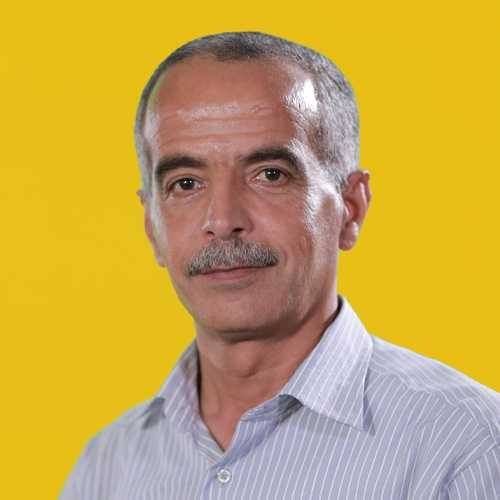
Liouane Noureddine
Position: Professor
Involved Faculty Members
Liouane Hend
Position: Assistant Professor
PhD Students to be mobilized within the project
Jablaoui Rahma
Jaballi Aya
Ben Ali Khaoula
Belhadj Nahla
Jellali Wahiba
Summary and Objectives
Preamble
This research focuses on the integration of generative artificial intelligence, particularly Generative Adversarial Networks (GANs), into the field of cybersecurity. The project focuses specifically on improving intrusion detection systems (IDS) in wireless sensor networks (WSNs) and connected environments of Industry 4.0. Generative AI is seen both as a defense lever and as a potential source of threat through its malicious exploitation.
Research Questions
RQ1
How does generative AI contribute to improving cybersecurity strategies, particularly in the areas of intrusion detection and protection of wireless sensor networks (WSN)?
RQ2
What are the main methods and techniques used by attackers exploiting generative AI to develop sophisticated cyber-attacks and evade traditional defense mechanisms through machine learning and especially deep learning (DL)?
RQ3
What possible and unexplored use of generative AI could be a concern when developing intrusion detection strategies robust to attacks generated by generative AI?
Motivation
Artificial intelligence (AI) technologies, and particularly Generative Adversarial Networks (GANs), are transforming cybersecurity through their applications in defensive and offensive strategies.
The scientific community has explored multiple defensive applications of generative AI in security systems. Within intrusion detection systems (IDS), GANs facilitate the generation of representative traffic patterns that improve learning efficiency and anomaly detection capabilities. Through the generation of adversarial examples, generative AI makes it possible to simulate sophisticated attack vectors, thereby strengthening the resilience of intrusion detection systems (IDS).
In malicious cyber-attack analysis applications, the generation of synthetic samples provides deeper insights into malicious behavior patterns, thus contributing to the development of effective countermeasures to increase the robustness of AI dedicated to IDS systems. This technology is particularly useful in detecting unknown intrusions by generating training datasets including suspected attacks, thereby improving classification accuracy through deep learning (DL) machines.
Furthermore, it can enable the automation of threat response mechanisms and the optimization of security policies through systematic network traffic analysis. However, significant challenges remain, particularly regarding the potential for exploitation of generative AI. An essential element to consider is the dual applicability of these capabilities. While security researchers use generative AI for defensive purposes, malicious actors can exploit similar techniques to develop sophisticated evasion methodologies that circumvent current protection mechanisms.
Objectives
The research questions (RQ) of the research project are based on several key considerations.
First, it is imperative to examine the existing literature to identify state-of-the-art approaches that leverage generative artificial intelligence, especially GANs, for defensive purposes, such as improving intrusion and anomaly detection systems through machine learning tools and especially DL. Understanding the strengths and limitations of these approaches is essential to develop more robust and effective defense mechanisms (RQ1).
Second, faced with the constant adaptation of attack tactics through adversarial examples, it is essential to anticipate and correct potential vulnerabilities related to the integration of generative AI in cybersecurity. This requires a proactive exploration of potential offensive strategies of adversarial samples, such as the generation of samples designed to bypass AI-based intrusion detection systems (RQ2).
The application areas targeted in our project concern the improvement of security technologies for WSNs and Industry 4.0, through the integration of generative artificial intelligence tools aimed at exploiting machine learning and deep learning to improve the robustness and availability of the secure information system as well as the intelligent identification system and secure location of production resources.
Summary
The boundaries of intelligent security systems and connected objects converge daily to create a common platform for hybrid secure systems. Moreover, the combination of generative artificial intelligence and connected objects via radio frequency opens a new dimension to secure technological progress. This connectivity and reliability offer attackers considerable space to launch cyberattacks. To defend against these attacks, intrusion detection systems (IDS) are widely used.
However, new areas of connected objects suffer from unbalanced and missing sampling data, which complicates the learning of intrusion detection and security systems against little-known attacks. Our research work aims to propose robust intrusion detection systems based on generative adversarial networks (GANs), where GANs generate synthetic samples on which IDSs are trained simultaneously with the original samples. The targeted model can also solve the problems of unbalanced or missing data.
Indeed, this research project aims at a new approach to intrusion detection and increasing the reliability and robustness of IDSs through the integration of generative adversarial networks (GANs). By harnessing the power of GANs to generate synthetic network traffic data that faithfully reproduces the real behavior of networks, we address a major challenge associated with IDS training datasets: the scarcity of unknown intrusion data.
Research Program and Methodology
Methodological Approach
All actions that will lead to designing and testing the different components of a robust and reliable intrusion detection system via generative artificial intelligence tools for connected objects take place in parallel in order to facilitate monitoring. Monthly presentations allow monitoring of progress, scientific production and difficulties encountered.
Project Implementation Timeline
Work Plan
Initial Phase
- Allocation of research themes
- Definition of a monitoring and evaluation procedure
- Literature review
- Adoption of a working method
- Definition of equipment and component needs
- Group presentations
- Participation in scientific events
- Effective start
- Monitoring and evaluation
Development and Realization
- Reflection concerning scientific production
- Monitoring and evaluation
- Participation in conferences accompanied by some personal publications
- Group presentations
- Practical realization
Implementation and Evaluation
- Interpretation of initial results
- Practical realization and implementation
- Article drafts
- Group presentation
- International journal publications
- Evaluation
Finalization and Synthesis
- Analysis of experimental results
- Group presentation
- Prototype finalization
- Overall analysis of project impacts
- Quantify results in terms of theses, scientific papers
- Inventory and analysis of unfinished points
- Summary report
Cooperation and Partnership
Cooperation with foreign laboratories
- Computer Vision Center (CVC, Universitat Autònoma de Barcelona, Spain) - Pr. Lluís Gómez Bigorda
- Digital Factory Vorarlberg GmbH, Department of Wireless Technologies and Industrial IoT, AUSTRIA - Pr. Jorge F. Schmidt
Purpose of cooperation:
- Hosting researchers for internships
- Co-supervision of PhD students
- Joint publications and communications
Expected Results
Main Results
- Development of a secure intelligent WSN prototype dedicated to Industry 4.0
- Skills development through research / 2 Theses and 1 Habilitation
Socio-economic Benefits of the Project
Development of Industry 4.0 in Tunisia
Potential and opportunity for the development of Industry 4.0 in Tunisia thanks to secure WSN technologies and their applications.
Intelligent Cybersecurity
Skills development in intelligent cybersecurity and research and development to meet the security challenges of connected environments.
Secure Networks
Development of secure WSN technologies and applications for various industrial and economic sectors.