
 FR
FR  EN
EN Involved Team
Project Leader
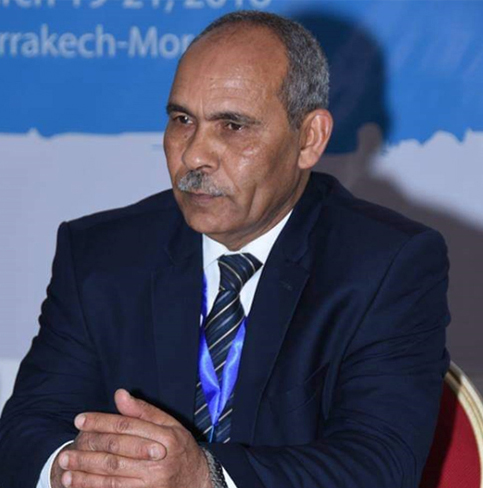
Messaoud Hassani
Position: Professor
Involved Faculty Members
Kallel Hichem
Position: Professor
Bouguila Nasreddine
Position: Professor
Dhouibi Hédi
Position: Professor
Garna Tarek
Position: Professor
Khouaja Anis
Position: Associate Professor
Benamor Anouar
Position: Associate Professor
Ben Njima Chakib
Position: Associate Professor
Rejeb Sofien
Position: Assistant Professor
Jaffel Ines
Position: Assistant Professor
PhD Students to be mobilized within the project
Fezai Ernna
Hafaiedh Hager
Zarrougui Wejdene
Salhi Oumayma
Nasri Ameni
Boumaiza Zied
Benamor Hajer
Ghabi Fahd
Zeiri Safa
Ameni Nasri
Yahyaoui Awatef
Tajouri TaleI
Gannoun Oumayma
Mellouli Sarra
Abdi Sirine
Chaarana Najwa
Raissi Hamza
Mdalla Mohamed
Touzia Rim
Atala Yasmine
Ben Jabra Marwa
Lassoued Ali
Ben Hadj Mohamed Sabeur
Minenni Amira
Basti Meriem
Fatnassi Yosra
Summary and objectives
Preamble
The rapid development of technologies and the intense competition among industrialists to gain the maximum share of national and international markets opens the way for researchers to develop new approaches and/or techniques to better control industrial processes in order to satisfy the performance suggested by the customer. These objectives require a perfect knowledge of these processes as well as the adaptation of existing approaches and the synthesis of new ones for the control of such processes, which can be of different natures, including continuous processes that can be linear, non-linear, singular, delayed, etc., and discrete processes or more precisely discrete event processes.
The proposed approaches concern the identification, diagnosis and control of these systems, emphasizing the insertion of artificial intelligence in the design operation. The real processes addressed in this project are robots and autonomous vehicles, electric vehicles, thermal engines, mechatronic systems, railway systems, electrical networks and transport systems.
Objectives
For identification we are led to design techniques that make it possible to estimate the model that best reproduces the behavior of the system for any set of measurements taken from the latter. In this theme, we opt for methods using statistical learning and we deal with all forms of the considered processes (linear, non-linear, stationary or not, with or without delay, etc.
For control we are interested in two types of systems, continuous systems and discrete event systems. Given the multitude of results proposed in the literature in terms of control algorithms, we will focus essentially on the design of new approaches for systems with particular specifications and we will place more emphasis on applications. In this context, we are interested in approaches using concepts from artificial intelligence such as meta-heuristics, artificial neural networks and more precisely those using deep learning for neural control of systems with variable delay and especially singular systems.
As applications we are interested in the rate of pollutant gases from a thermal engine, electric vehicles, robots and autonomous vehicles, electrical energy networks,
For observers where we are interested in particular cases concerning the synthesis of observers for singular delayed systems with unknown inputs and especially in the presence of uncertainties on the system parameters. We also propose the synthesis of filters for these systems with delay on the state and on the input and excited by finite energy disturbances.
When the singular system is non-linear and is affected by unknown inputs, we propose a state and unknown input estimation method using a multi-model approach. We also propose the synthesis of a filter in the frequency domain and thus apply control approaches.
Similarly when the singular system is bilinear we propose to synthesize correctors and observers for this type of system when they have delays and are subject to unknown inputs present at the state equation and the output equation.
Finally the case of uncertain linear systems will be the subject of the same studies.
Research program and methodology
Team organization
There are four teams contributing to the project, which interfere and deal with several themes at the same time. It should be noted that all contributions will be validated either on the laboratories' own processes or on processes within other laboratories abroad with which our laboratory maintains collaborative links.
First team
- Multivariable predictive control based on the Laguerre bilinear model.
- Optimization of deep learning algorithms for estimating the wear of railway infrastructures
- Improving the robustness and efficiency of learning methods for autonomous robot navigation in dynamic environments.
- Evolutionary diagnosis for monitoring discrete event systems
Second team
- Prognosis and evaluation of transport systems
- Diagnosis of mechatronic systems using AI
- Observation and control of non-linear singular systems with variable delays.
- Observation and detection of singular systems with unknown inputs
- Contribution to deep learning methods for robust neural control of systems with unknown variable delays
- Control of uncertain linear singular systems with variable delays
- Observation and control of singular bilinear systems.
- Contribution to the control of the pollutant gas rate of a thermal engine.
Third team
- Optimization of road safety by integrating ADAS and V2x.
- Contribution to the safety of autonomous driving of land vehicles.
- Intelligent algorithms for robust robots with trajectory planning and fault-tolerant control in complex environments
- Development of a model of the impacts of preventive and corrective maintenance
- Deep learning-based trajectory prediction for autonomous vehicles
Fourth team
- Diagnosis of discrete event systems
- Object security protocol for home autonomy assistance
- Fault diagnosis by machine learning
- Deep learning method for robot control by artificial vision with implementation on an embedded architecture.
- Creation of deepfakes using deep learning and blockchain
- Deepfakes and digital security
- Intelligent robust control of a DELTA robot
- Control and dispatching of an electrical network with multi-sources of renewable energies
Project implementation timeline
- State of the art on certain control strategies (predictive, robust, ...)
- State of the art on deep learning.
- State of the art on observers
- State of the art on diagnosis
- State of the art on discrete systems
- State of the art on deepfakes
- State of the art on diagnosis
- Proposal of new control approaches
- Proposal of new dedicated techniques for fault diagnosis
- Proposal for observer calculation for singular systems with delay and parametric uncertainty.
- Proposal of dedicated methods for the diagnosis and control of discrete event systems
- Continuation of developments started in the second year.
- Validation of the proposed methods by simulation
- Validation of the proposed techniques on real processes and the aforementioned benchmarks
Cooperation and partnership
International partners
- 1st organization: G-SCOP, Grenoble - France
- 2nd organization: CRISTAL in Lille
- 3rd organization: Laboratoire des technologies innovantes (LTI) Amiens, France
- 4th organization: Laboratoire Universitaire de Recherche en Production Avancée (LURPA) Paris Saclay, France
- 5th organization: Institut de Recherche en Systèmes Electroniques Embarqués (IRSEEM) Rouen, France
Expected results (publications, patents, theses, habilitations, ...)
Expected scientific productions
Expected results include:
- Scientific publications in international journals
- Patent filings for technical innovations
- Writing and defense of doctoral theses
- Preparation of habilitations to direct research
- Development of prototypes and demonstrators
Socio-economic benefits of the project
Economic and social impacts
- Providing the concerned industry with expertise on the control of discrete systems.
- Applications of intelligent control strategies using new techniques based on deep learning
- Providing the concerned industry with expertise on the classification and detection of medical image defects.